
 Keynote Speaker
 Service Catalog
 717-790-8723
Organizational culture is the invisible force that shapes how people behave, interact, and perform within a workplace. A set of shared norms, values, and behaviors that define “how things are done around here.” While culture can feel nebulous and hard to measure, its impact is profound and measurable.
Through our 30+ years working in organizational development across all business sectors, we know that a healthy culture is one where every individual has the opportunity and tools to thrive, and where the organization itself becomes more resilient, innovative, and mission driven. SCP’s GROWTH Index™ provides the data to measure where an organization’s culture is strong and where there are gaps and areas for improvement.
Healthy culture is not created and maintained overnight. A healthy organizational culture fosters trust, psychological safety, purpose, inclusivity/belonging, transparency, accountability, and integrity. Employees feel empowered to speak up, take risks, and contribute their ideas. These categories help pinpoint where culture is strong, and where it may be undermining performance or employee engagement.
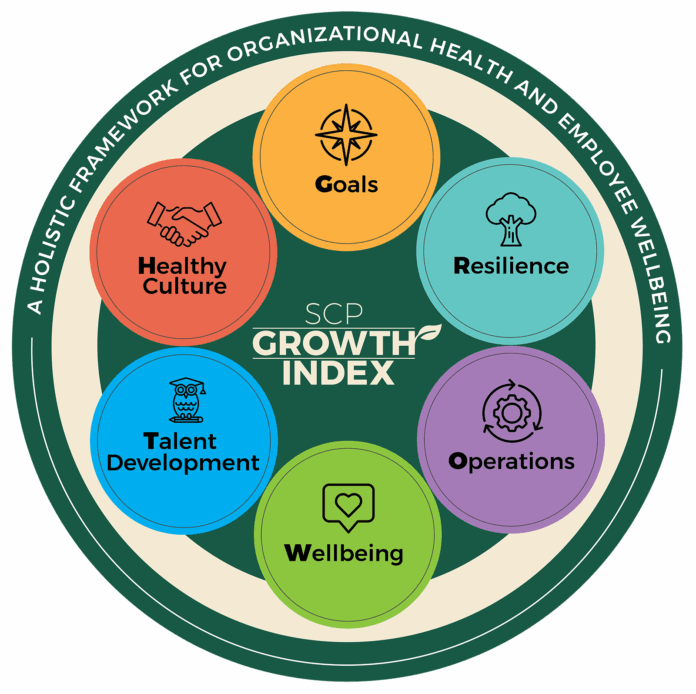
One organization currently partnering with Strategic Consulting Partners is a regional human services nonprofit with more than 350 employees. The organization already demonstrates a healthy culture: employees consistently report feeling valued, heard, and connected to the mission. Annual engagement surveys show steady gains in transparency, accountability, and communication. Rather than assuming that a strong culture will sustain itself, the organization chose to use the SCP GROWTH Index™ to deepen that strength. Leadership is committed to openly sharing the results with staff and engaging them in developing solutions to strengthen organizational health.
They understand the organization’s mission and see how their work brings value and connects to it. When culture supports these behaviors, innovation flourishes, collaboration strengthens, and retention improves. It evolves through leadership decisions, team dynamics, operational practices, and employee experiences. SCP’s GROWTH Index™ breaks down organizational health into measurable dimensions.
Communication Is Key to Healthy Culture
Conversely, when culture is misaligned, especially when values are unclear, communication is inconsistent, or leadership lacks transparency, the employees disengage. They may feel undervalued, unsupported, or confused about expectations. These cultural fractures often show up in SCP’s assessment as low scores in leadership trust, team cohesion, or wellbeing. Addressing these gaps will improve morale and restore the foundation of organizational health.
In one recent client engagement, SCP learned through its organizational assessment that the lack of consistent and transparent communication with staff led to mistrust, lack of team cohesion, and staff turnover. Based on our findings and recommendations, leadership made dramatic shifts in how, when, and what they communicate to staff after understanding the link between communication and employee engagement and staff retention.
Leadership plays a pivotal role in shaping culture. It is said that “people don’t quit jobs, they quit bosses.” Supervisors and executives alike influence how norms are formed and sustained. Their behaviors, communication styles, and decision-making processes set the tone for the entire organization. Leaders who model fairness, emotional intelligence, and accountability help build cultures where people feel safe, respected, and motivated.
Modeling Wellness
Since healthy culture starts at the top, a leader who models wellness is a critical part of that equation. When leadership prioritizes wellbeing, it signals that people matter as much as performance, creating trust and engagement across the organization.
The data is clear: a recent study by Keevee found that “employee wellness is critical for fostering productivity, engagement, and retention.” The study provided 69 Employee Wellness Statistics for 2025 including:
- 76% of employees say wellness programs improve their productivity. Healthy workers are more engaged and efficient (Forbes).
- 89% of employees at companies with wellness programs recommend their employer. Wellness programs significantly boost employer reputation (Harvard Business Review).
- Employers save $6 for every $1 invested in wellness programs. Reduced healthcare costs and absenteeism deliver strong ROI. (RAND Corporation)
Embedding wellness into culture requires intentional leadership behaviors:
- Modeling work-life balance–leaders who take breaks and respect boundaries normalize healthy habits.
- Communicate with care—regular check-ins and transparent conversations about workload to reduce stress.
- Invest in resources—provide mental health support, flexible schedules, and recognition programs that reinforce wellness as a priority.
When leaders champion wellness, they create cultures where employees feel valued, connected, and motivated, fueling resilience and sustainable growth.
Emotional Intelligence Helps Organizations Thrive
We have the privilege of working with thousands of leaders and know that current organizational development research shows emotionally intelligent leaders are more effective at managing conflict, inspiring teams, and driving results. A study in Quality & Quantity found that leaders with high emotional intelligence enhance communication, decision-making, and conflict resolution leading to stronger employee engagement and job satisfaction. These qualities create a culture of trust and psychological safety and reduce stress and turnover while boosting collaboration and innovation.
Similarly, a case study of Sundar Pichai, CEO of Google, illustrates this principle in action. Pichai’s leadership style, rooted in empathy, humility, and emotional awareness helped create a culture of psychological safety and innovation at Google.
At SCP, we have seen an increase in requests for Emotional Intelligence (EI) training for leaders, managers, and teams. EI assessments and workshops help leaders build self-awareness, empathy, and communication skills, which directly improve organizational health by fostering trust, collaboration, and resilience. Leaders can increase EI through structured feedback, coaching, and experiential learning, leading to stronger cultures, reduced conflict, and higher engagement.
Organizational Culture Is Dynamic
Organizational culture must evolve to meet the needs of a changing workforce. SCP conducted a recent study on Gen Z and Gen Alpha which revealed that younger generations expect more from their employers. They value inclusivity, transparency, and personal wellbeing. They want to work in environments where they are seen as individuals, not just employees. A healthy culture must be flexible enough to accommodate these expectations while staying true to the organization’s core values.
The power of SCP’s GROWTH Index™ is that it helps to transform data gathered about an organization’s culture from a vague assumption into actionable recommendations. With each assessment, leaders can see where their organization is thriving and where it needs support. Whether it is improving internal operations, strengthening team dynamics, or enhancing leadership development, the assessment provides a roadmap for cultural transformation.
Understanding the connection between wellbeing, culture, and productivity is a strategic advantage. It drives performance, attracts talent, and sustains mission achievement.
Inquire today about SCP’s GROWTH Index™
Contact us to learn how your culture is shaping your organization’s future—and how you can make it even stronger.
Contact Us