
 Keynote Speaker
 Service Catalog
 717-790-8723
When we think about what makes an organization healthy, we often focus on leadership, culture, and employee engagement. But behind the scenes, internal operations play a critical yet often overlooked role in shaping organizational health.
Operations encompass the systems, processes, policies, workflows, reporting structures, and technologies that support the performance of individuals, teams, and the organization as a whole. When these elements are aligned and functioning well, they create conditions for productivity, innovation, and mission achievement.
In the SCP GROWTH Index™ – a proprietary framework for diagnosing organizational health – O stands for Operations: the systems, structures, and processes that enable effective execution and collaboration. While leadership and culture often take center stage, operations[KG1] determine whether strategy can be implemented, whether teams can collaborate, and whether innovation can scale.
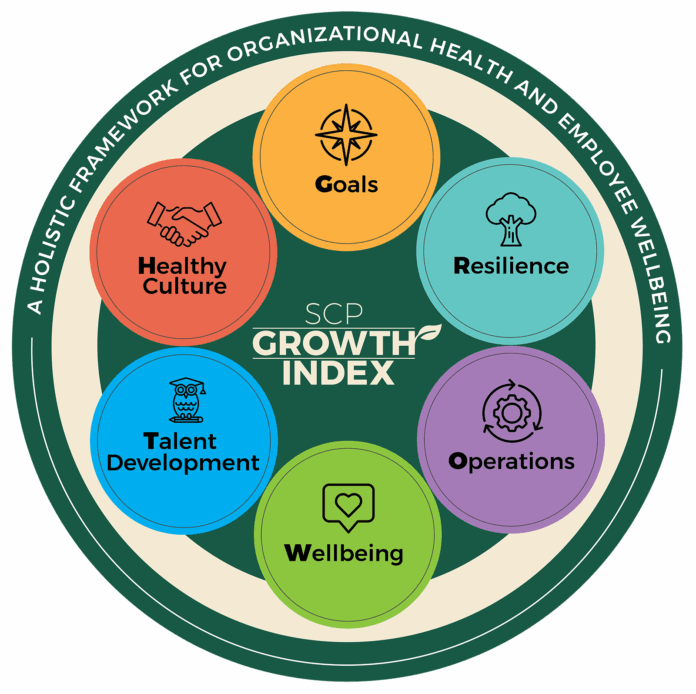
Every other GROWTH dimension, from strategic clarity (G = Goals) to culture and belonging (H = Healthy Culture), is supported by the infrastructure Operations provides. Operational excellence is key to lasting success. It involves consistently striving for improved efficiency, quality, and effectiveness within an organization’s processes. By cultivating a culture of continuous improvement and aligning all operations with strategic goals, organizations can better adapt to changes, deliver greater value to customers, and maintain a competitive edge in their industry.
Business Operations – The Architectural Masterpiece
Running a business is much like designing and maintaining an architectural masterpiece. It requires vision, structure, and ongoing care. Just as a building begins with blueprints, a business starts with a strategic plan that aligns resources and sets direction. Leadership acts as the architect, shaping purpose and priorities, while core values form the foundation that supports everything else. Financial planning and risk management provide structural integrity, and high-quality resources, people, capital, and technology ensure resilience and longevity.
Execution depends on well-coordinated teams, guided by clear plans and monitored through KPIs and audits, much like construction crews and safety inspections. Continuous improvement and adaptability are essential for growth, just as buildings need maintenance and flexible design to remain relevant. A successful business, like a well-built structure, thrives when it’s designed with foresight, built with integrity, and maintained for the future.
In our current world, technology plays a pivotal role. The right tools can enhance communication, automate routine tasks, and provide data for informed decision-making. But tech must be implemented thoughtfully with input from those who use it daily. The SCP GROWTH Index™ prompts organizations to consider whether their systems benefit their people or hinder them. If your organization faces operational challenges, the SCP GROWTH Index™ provides a data-driven solution with tailored recommendations to improve efficiency and results. Healthy operations make success achievable.
Operational Impact in Action
When operations are outdated, fragmented, or misaligned, progress can stall, frustrate employees, and erode trust. In SCP’s work, we’ve seen these dynamics play out across sectors.
One engagement with a department inside a state agency revealed significant operational gaps: siloed workflows, redundant approval processes, and outdated reporting systems were slowing service delivery and creating frustration among staff. These challenges aligned directly with the Operations dimension of the GROWTH framework. SCP facilitated a cross-functional review of internal systems, supported the implementation of a centralized intake process, and helped leadership clarify decision-making protocols. The result was faster turnaround times, improved morale, and a renewed sense of alignment across teams.
In the professional services sector, SCP worked with a growing firm that had recently expanded its client base and service offerings. While demand was high, internal operations hadn’t kept pace with industry changes. Management structures remained rigid, policies were outdated, and the firm’s technology stack was no longer fit for purpose. Employees struggled with manual processes, fragmented tools, and unclear escalation paths – all of which became roadblocks to growth and marketplace competitiveness.
During SCP’s assessment, these issues surfaced as operational pain points that aligned with the GROWTH framework’s Operations dimension. SCP helped the firm prioritize infrastructure upgrades, streamline project management systems, and implement shared protocols for onboarding and communication. Within months, the team reported higher productivity, reduced burnout, and stronger client satisfaction.
These examples show that operations is about more than efficiency; it gives people the tools to succeed and boost productivity. When systems are responsive, policies are inclusive, and technology is supportive, employees can focus on mission-critical work. When operations are misaligned, even the most visionary strategies can falter.
Are you ready to transform your operations and set a new standard for organizational health?
Becoming a pilot partner with the SCP GROWTH Index™ provides organizations with the unique opportunity to shape and refine the framework while gaining early access to actionable insights and tailored support. Pilot partners not only accelerate their own operational improvements but also help set the standard for best practices in organizational health.
Contact us today to learn more about the SCP GROWTH Index™ at [email protected].